
REVIEW: Christopher Nolan’s ‘The Odyssey’ is a work of art
The culture war led me astray.

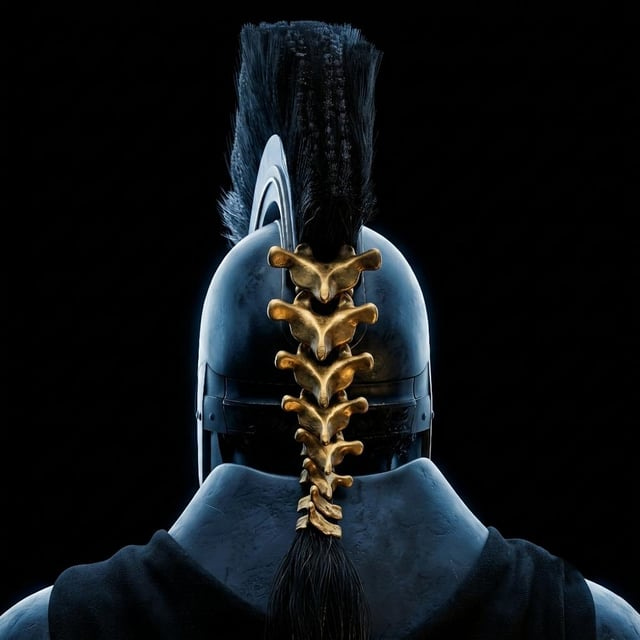
Christopher Nolan is the latest storyteller to bring The Odyssey to life. If you haven’t already, check out Bridget’s review of the movie. I saw it Tuesday, and I agree with Bridget’s take: This is a work of art.
I’ve always loved the Kirk Douglas-led version of The Odyssey from 1954, and the entire mythic fantasy/action epic genre that arose in the 1940s and lasted for several decades. But Christopher Nolan’s rendition lifted the poem to a new height.
I went into the movie with a touch of angst from the culture narrative, but Bridget’s stance shook me out of it, so my expectations were pretty high. And the film surpassed them—enormously.
For context: I adore The Odyssey. One of my children is named after an important character in the poem. I’ve studied it for years in various ways, from various contexts. My favorite novel is James Joyce’s Ulysses, the Irish rendition of The Odyssey. One of my favorite poems is “Ulysses” by Lord Alfred Tennyson.
I’m also a Dante fanboy, and my view of Odysseus is complicated by Dante’s depiction of Odysseus/Ulysses in Inferno, that his tactical prowess probably ultimately did not pay off. Nolan certainly has a history of delivering characters with similar complexities, but none of them demanded the depth required of portraying Odysseus. Yet he succeeded.
Best of all, he gave us an entertaining experience. The action, in all its violence, was enthralling. But also the cinematic action, a cascade of flashbacks that jerk us around like Nolan’s breakthrough film Memento (2000), then pause in a way that strengthens the longer scenes. Most of all, it was fun.
This is important. Entertainment is a stabilizing force. It provides us with much-needed structure. When we have been entertained, we perform better in all parts of our lives, both individually and in connection to others.
Let’s accept the theory that entertainment takes two forms: low art, “agreeable art” and high art, or “fine art.” Low art is immediate and fleeting. Its effects are momentary, with no lingering influence on our emotions or thoughts. It has no distance or endurance. But it can be a lot of fun. It’s often a much-needed escape.
Fine art is the cud of insight and reflection. When you walk away from a successful experience with fine art, it burrows itself into your mind and lingers. It has distance. Part of it will always capture you. The risk is that it can become too abstract and intellectualized for enjoyment.
Nolan’s take on the Odyssey accomplished the best of both experiences without fumbling much into their downsides. This is a breathtaking maneuver. And you can tell that he orchestrated it with a unique artistic intensity.
I was doubtful about Nolan’s casting Matt Damon as Odysseus, but Damon performed the role masterfully. Overall, Nolan was brilliant in his controversial casting: he outfoxed the right-coded discourse, which was absolutely right, based on the announcement of the cast and the trailer. As Bridget noted in her Odyssey episodes, the casting of Lupita Nyong’o as Helen of Troy and Clytemnestra wound up being oddly perfect. My only real irk was the role of a certain gender-dubious someone—or rather, I was peeved by the character’s maudlin undertones. But this frustration was minor, especially in the grand scheme of the film.
Another grievance people had was the film’s use of lingo like “daddy,” “let’s go,” and “fuck off.” The modern-day vernacular that we saw in the trailer is actually fairly rare, the typical one-liners planted specifically to make trailers as insufferably dumb as possible. What’s impressive is that the Americanized lingo actually complemented the deeply poetic moments—and there are a lot of them.
Nolan accomplished a lot of technical and cinematic maneuvers: the chaotic sequencing that led up to the Cyclops scene, the choice to portray the Sirens scene from the perspective of Odysseus’s crew, the claustrophobia of the shots inside the Trojan horse, the patchwork delivery of themes and symbolism, like the decapitated statue. There was a lot of cinematic trickery, and it enhanced Nolan’s portrayal of Odysseus, the man of twists and turns, the complicated man, the strategist, the tactician, the city-sacker.
And this leads to my broadest takeaway, my counterargument to the accusation that Nolan’s rendition somehow degrades Homer’s original text—an accusation so heated that you’d think the movie takes place at a BLM protest: The Ancient Greeks loved to tell stories. And Odysseus is arguably their greatest hero, certainly their most complicated.
Nolan’s approach honors Ancient Greek thought and community. We can’t call it society. The Romans invented the concept of “society” and “social.” The Ancient Greeks thought of community as more local, a balance of the private life (household) and the civic life, the polis, which roughly translates to “political community.” Aristotle writes that “the polis comes into existence for the sake of living, but remains in existence for the sake of living well.”
The polis was the birthplace of politics. Or rather, through legends full of conflict. Storytelling is the basis of Ancient Greek community and social character, its mythological spirituality and history-mindedness. The polis offered everyday men the chance to achieve immortal fame.
This space of appearance is what forms whenever people act and speak together, which means it can also vanish at any moment. Homer’s Odyssey outlasted this civilization it arose from, and many other fallen kingdoms that used its power to strengthen themselves—gone.
I want to close with the final lines of Lord Alfred Tennyson’s “Ulysses,” because it really captures the depth of Odysseus, a depth that Nolan also succeeded in portraying. In the poem, Odysseus spends a while complaining about his confinement at home, then slowly builds into the fervor of a speech, into the rousing declaration of a commander, and you can see how so many valorous characters died for this literary titan, the ultimate tactician and legend of fiction and mythology.
Because Odysseus embodies all the qualities that define Western Civilization, especially when its very survival is threatened. Who can beat an opponent who fights the gods because humans aren’t a challenge? A tactician who gives total life through speech and action, delivering a story that has survived 3,000 years for a reason.
So even if Nolan’s Odyssey is a defilement of the poem’s legacy, it could hardly make a tiny blemish on the masterpiece it depicts. But I believe the film once again proves that Homer’s Odyssey has a depth and magnificence that has made it timeless and universal.
Though much is taken, much abides; and though
We are not now that strength which in old days
Moved earth and heaven, that which we are, we are,
One equal temper of heroic hearts,
Made weak by time and fate, but strong in will
To strive, to seek, to find, and not to yield.